Health & wellness
CFU at Manufacture vs CFU at Expiration: What Probiotic Labels Mean

If you've compared probiotic supplements, you've probably noticed that many labels prominently advertise a large number of CFUs. One product may claim 20 billion CFUs, another 50 billion, and another 100 billion. But there's an important detail that often receives much less attention: when that CFU count is measured.
Some probiotic labels list the number of Colony Forming Units (CFUs) at the time the product is manufactured, while others guarantee the amount available at the expiration date. Although the difference may seem minor, it can significantly affect how you compare products and understand what you're actually getting.
Because probiotics are living microorganisms, their viability naturally changes over time. Heat, moisture, oxygen, packaging, formulation, and storage conditions all influence how many organisms remain alive throughout a product's shelf life. Understanding these factors can help you make a more informed purchasing decision rather than focusing only on the biggest number printed on the front of the bottle.
In this guide, we'll explain what CFUs measure, why probiotic counts change over time, and what "CFU at manufacture" versus "CFU at expiration" really means when evaluating a probiotic supplement.
Key Takeaways
Knowing when the CFU count is measured helps you compare labels more accurately.
- CFU stands for Colony Forming Units, an estimate of the number of live microorganisms in a probiotic.
- Some products list CFUs at the time of manufacture, while others specify the amount guaranteed through the expiration date.
- Probiotic viability naturally declines over time, making stability an important consideration.
- Storage conditions, packaging, and formulation all influence probiotic shelf life.
- A probiotic's overall quality depends on more than simply having the highest advertised CFU count.
Table of Contents
Jump to the label term or stability question you want to understand.
- What Does CFU Mean?
- What Does CFU at Manufacture Mean?
- What Does CFU at Expiration Mean?
- Why Do Probiotic Counts Decline?
- Does a Higher CFU Always Mean a Better Probiotic?
- How Formulation Helps Maintain Potency
- What This Means for Balance ONE Probiotic
- How to Read Any Probiotic Label
- Bottom Line
- Frequently Asked Questions
What Does CFU Mean?
CFU stands for Colony Forming Units. It is the standard way manufacturers estimate the number of living microorganisms present in a probiotic supplement.
Unlike vitamins or minerals, probiotics are made up of living bacteria. Scientists cannot simply weigh them to determine potency. Instead, laboratory testing estimates how many microorganisms remain capable of growing and forming colonies under controlled conditions. That estimate becomes the product's CFU count.
For consumers, CFUs provide a useful way to compare probiotic products, but they tell only part of the story. A probiotic's effectiveness also depends on factors such as the specific strains included, how well they survive manufacturing and storage, and whether they reach the intestines in a viable state.
| Term | Meaning |
|---|---|
| CFU | Estimated number of live microorganisms capable of forming colonies |
| Manufacture Date | When the product is produced |
| Expiration Date | The end of the labelled shelf life |
| Viability | The ability of probiotic organisms to remain alive over time |
It's also important to remember that a larger CFU number does not automatically indicate a higher-quality probiotic. Factors such as strain selection, manufacturing quality, and delivery technology all contribute to the overall value of a probiotic formula.
For a broader overview of what the studies say about individual probiotic strains, see our guide to 16 Science-Based Health Benefits of Probiotics.
What Does "CFU at Manufacture" Mean?
When a label states its CFU count at manufacture, it refers to the number of live microorganisms measured shortly after production.
This approach is common throughout the supplement industry. Manufacturers test the finished product, verify the number of viable organisms present, and report that figure on the label.
However, probiotics are living organisms. Even under recommended storage conditions, some naturally lose viability over time. Because of this expected decline, manufacturers may formulate products with more live bacteria than the label ultimately intends consumers to receive throughout the product's shelf life.
This practice is sometimes called an "overage." It helps account for the gradual reduction in viable organisms that occurs during storage before the product reaches its expiration date.
Listing CFUs at manufacture is not inherently misleading. It simply reflects a different point in time. What matters is whether consumers understand exactly what the number represents.
When comparing products, it's worth checking whether one product reports CFUs immediately after production while another guarantees its CFU count at the end of shelf life. Without that context, two products displaying identical numbers may not be directly comparable.
What Does "CFU at Expiration" Mean?
A probiotic labelled with CFU at expiration indicates the number of viable organisms the manufacturer expects the product to contain through its labelled shelf life when stored according to the package directions.
Many consumers find this figure easier to interpret because it more closely reflects the potency available when they actually use the product, which may be months after it was manufactured.
Supporting a guaranteed CFU count at expiration generally requires manufacturers to evaluate probiotic stability throughout the product's shelf life. Factors such as ingredient selection, moisture control, packaging, and manufacturing processes all contribute to maintaining viability over time.
Rather than focusing solely on the highest advertised CFU number, it is often helpful to understand when that number applies and whether the product provides information about its expected potency throughout storage.
Why Do Probiotic Counts Decline Over Time?
Like other living organisms, probiotic bacteria gradually lose viability as they age. This natural process begins after manufacturing and continues throughout storage. The rate of decline varies depending on the bacterial strains, formulation, packaging, and environmental conditions.
Several factors influence probiotic shelf life.
Heat
Higher temperatures generally accelerate the loss of viable probiotic organisms. This is one reason manufacturers recommend storing products according to the label instructions and avoiding prolonged exposure to excessive heat during shipping or storage.
Moisture
Water is one of the biggest threats to probiotic stability. Excess moisture may activate microorganisms prematurely or reduce their long-term viability. Protective packaging and moisture-control measures help minimise this risk.
Oxygen
Some probiotic strains are more sensitive to oxygen than others. Packaging designed to limit oxygen exposure may help improve shelf stability for certain formulations.
Time
Even under ideal storage conditions, probiotic viability gradually changes over time. This is a normal characteristic of living microorganisms rather than a manufacturing defect.
Manufacturing Quality
Carefully controlled manufacturing processes, ingredient handling, and stability testing all contribute to producing probiotic supplements with consistent quality throughout their intended shelf life.
| Factor | Potential Effect on Probiotic Stability |
|---|---|
| Heat | Can accelerate loss of viable organisms |
| Moisture | May reduce long-term viability |
| Oxygen | Can affect oxygen-sensitive strains |
| Time | Gradual natural decline in viability |
| Packaging | Helps protect probiotics during storage |
Does a Bigger CFU Number Mean a Better Probiotic?
Not necessarily.
Large CFU numbers are often featured prominently in probiotic marketing because they are easy to compare. However, the highest number is not always the most meaningful indicator of product quality.
Several other factors deserve equal consideration, including:
- Whether the CFU count applies at manufacture or expiration.
- The specific probiotic strains included.
- The quality of the manufacturing process.
- The product's delivery technology.
- Whether the product has been formulated with long-term stability in mind.
A thoughtfully designed probiotic with a moderate CFU count may provide a more realistic expectation of potency throughout its shelf life than a product advertising an extremely high number measured only immediately after production.
Reading labels carefully can help you compare products more accurately. Look for the full strain identification, the CFU count at expiration, the expiry date, and storage instructions.
How Formulation Helps Maintain Probiotic Potency
Maintaining probiotic viability involves far more than selecting bacterial strains. Product formulation, manufacturing methods, packaging, and delivery technology all play important roles in supporting stability throughout a product's shelf life.
Manufacturers may use specialised production techniques to reduce moisture exposure, select protective packaging materials, and evaluate stability under recommended storage conditions. Together, these steps help preserve viable organisms over time.
Delivery technology is another important consideration. Some probiotic formulations are designed to release their contents gradually rather than immediately. Different delivery systems may influence how probiotic organisms are protected before they reach the digestive tract.
If you'd like to learn more about this topic, see our article on Why Time-Release Probiotics Are More Effective, which explains how delivery technology differs among probiotic formulations.
What This Means for Balance ONE Probiotic
When comparing probiotic supplements, it's helpful to look beyond the headline CFU number and consider how the product is formulated to support stability throughout its shelf life.
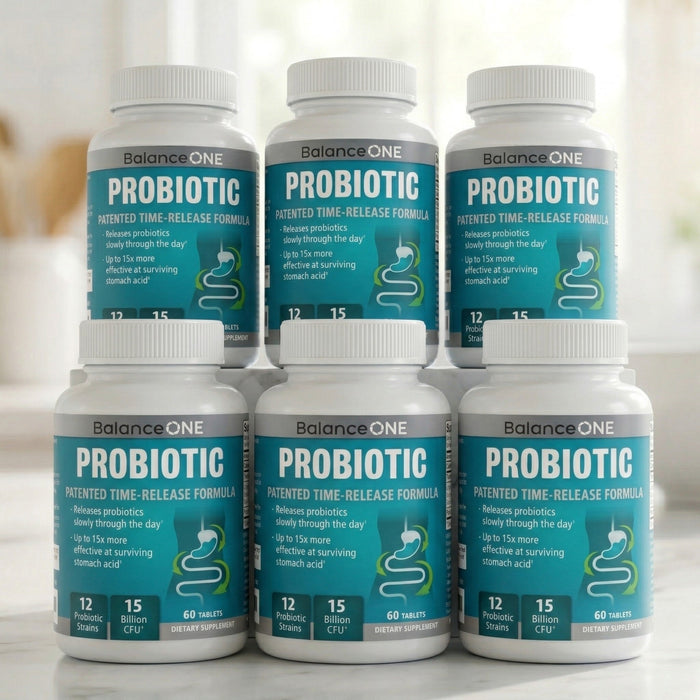
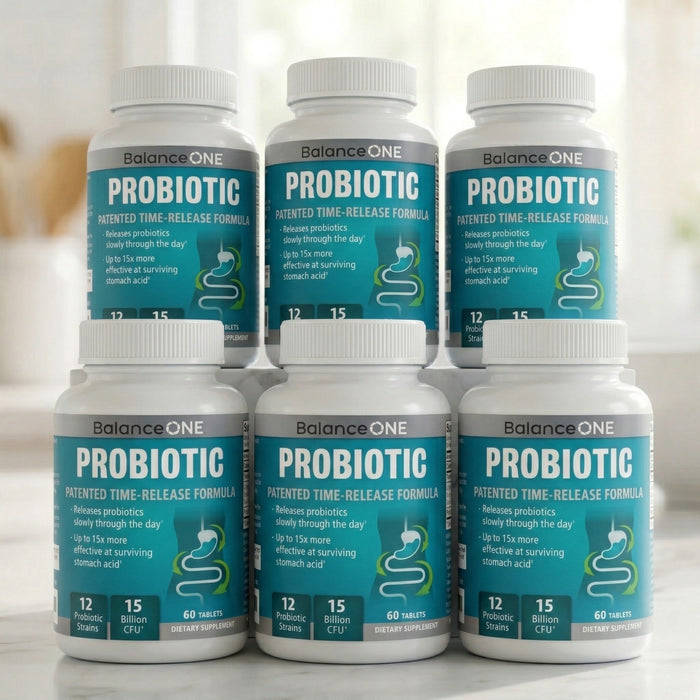
Balance ONE Probiotic contains 15 billion CFUs at manufacture, with a minimum of 5 billion CFUs guaranteed at expiration when stored as directed, plus 12 probiotic strains, and a BIO-tract® time-release tablet designed to gradually release the probiotics over approximately 8–10 hours. Rather than relying solely on a high starting CFU count, the formula is designed with stability and delivery in mind to deliver live organisms according to its labelled specifications.
As with any probiotic, consumers should always refer to the product label to understand exactly how CFU information is presented and follow the recommended storage instructions. Product quality depends on multiple factors—including strain selection, manufacturing practices, packaging, and delivery technology—not simply the largest advertised number.
Tablets and capsules differ in construction, but dosage form alone does not establish probiotic effectiveness.
How to Read Any Probiotic Label
Shopping for a probiotic becomes much easier once you know what information to look for. Instead of comparing products based only on the highest CFU number, consider the complete picture.
Use this checklist when evaluating any probiotic supplement:
- Check when the CFU count is measured. Is it listed at manufacture or guaranteed through expiration?
- Look for an expiration date. Avoid products with unclear shelf-life information.
- Review the probiotic strains. Different strains have been studied for different purposes, so quality matters alongside quantity.
- Read the storage instructions. Proper storage helps preserve probiotic viability throughout the product's intended shelf life.
- Consider the delivery system. Tablets, capsules, delayed-release technologies, and other formulations are designed differently.
- Look for quality manufacturing. Third-party testing for purity and quality and appropriate manufacturing standards can provide additional confidence.
Understanding labels also helps set realistic expectations. A probiotic with a moderate CFU count, transparent labelling, and a carefully designed formulation may be a better choice than one advertising an exceptionally high number without explaining how long that potency is expected to last.
Once you've selected a probiotic, proper daily use also matters. Our article on What Is the Best Time of Day to Take Probiotics? discusses factors that may help you establish a consistent routine.
Storage Tips for Maintaining Probiotic Potency
Even the highest-quality probiotic can lose viability more quickly if it isn't stored properly. While storage recommendations vary by product, following the manufacturer's instructions can help maintain the product throughout its intended shelf life.
General best practices include:
- Store the product according to the label directions.
- Keep the container tightly closed after each use.
- Avoid prolonged exposure to excessive heat or humidity.
- Do not leave probiotics in a hot vehicle or other high-temperature environments.
- Use the product before its expiration date.
Remember that not every probiotic requires refrigeration. Storage recommendations depend on the formulation, manufacturing process, and packaging used by each manufacturer.
Why Consistency Matters More Than Chasing the Highest CFU
Many shoppers assume that choosing the probiotic with the largest advertised CFU count is the safest decision. In reality, consistency and product quality are often more meaningful than selecting the highest number available.
A well-designed probiotic combines appropriate strains, careful manufacturing, protective packaging, and a delivery system intended to support the survival of beneficial microorganisms throughout storage and use.
Equally important is taking the probiotic consistently. Most probiotic supplements are intended for regular daily use, and following the manufacturer's recommended serving size helps ensure you're using the product as designed.
If you're new to probiotics, it's also helpful to understand what changes you might reasonably notice over time. Our article 7 Signs Your Probiotic Is Working: What to Expect and When explains common experiences and realistic expectations.
Safety Considerations
Live-microbe supplements are generally well tolerated by healthy adults, but people with severely weakened immune systems or serious illness should seek individualized medical advice before taking them.
Bottom Line
The difference between CFU at manufacture and CFU at expiration is one of the most important details on a probiotic label—and one that many shoppers overlook.
Because probiotics are living microorganisms, some loss of viability over time is expected. That's why understanding when a CFU count is measured provides valuable context when comparing products.
Rather than focusing only on the largest advertised number, consider the complete formulation. Product stability, strain selection, manufacturing quality, packaging, storage recommendations, and delivery technology all contribute to a probiotic's overall design.
By learning how to interpret probiotic labels, you'll be better equipped to compare products confidently and choose one with clear strain identification, stability information, and storage directions.
Frequently Asked Questions
These answers address the CFU details most commonly found on probiotic packaging.
Is CFU at expiration better than CFU at manufacture?
Neither approach is inherently better. CFU at expiration tells you how many viable organisms the manufacturer expects the product to contain through the end of its labelled shelf life, while CFU at manufacture reflects the count shortly after production. Understanding which figure is being reported makes it easier to compare products accurately.
Why do probiotics lose potency over time?
Probiotics are living microorganisms, so some decline in viability is expected during storage. Factors such as heat, moisture, oxygen exposure, time, packaging, and formulation all influence how quickly this occurs.
Should I avoid probiotics that list CFUs at manufacture?
No. Many reputable manufacturers report CFUs at manufacture. The important thing is understanding what the label means and evaluating the product's overall quality rather than focusing on a single number.
How should probiotics be stored?
Always follow the storage instructions provided on the product label. Proper storage helps maintain product quality throughout the intended shelf life.
Can expired probiotics still contain live bacteria?
Some viable organisms may still be present after the expiration date, but the manufacturer is no longer guaranteeing the product's labelled potency. For the best assurance of quality, use probiotic supplements before their expiration date and store them according to the label directions.
If you are seriously ill or have a weakened immune system, check with a healthcare professional before taking a probiotic.