Health & wellness
Probiotic Tablets vs Capsules: What’s the Difference?
When shopping for a probiotic, it's easy to focus on the number of strains or the CFU count printed on the label. While those details are important, they're only part of the story. The way a probiotic is delivered—whether in a tablet or capsule—can also influence how the beneficial bacteria travel through your digestive system.
That doesn't mean one dosage form is automatically better than the other. High-quality probiotic tablets and capsules can both be effective when they're thoughtfully designed. Factors such as stability, protection from stomach acid, and controlled delivery often matter more than whether the product comes as a tablet or a capsule.
In this guide, we'll compare probiotic tablets and capsules, explain how time-release technology fits into the picture, and discuss what to look for when choosing a probiotic that has evidence for the digestive outcome you want.
- Key Takeaways
- Both probiotic tablets and capsules can be effective delivery systems.
- The overall formulation is usually more important than the dosage form alone.
- Protection from stomach acid can influence how many live bacteria reach the intestines.
- Time-release technologies are designed to gradually release probiotics during digestion.
- When comparing products, consider strains, CFU count, stability, expiration potency, and delivery technology together.
Table of Contents
Use the sections below to compare tablets and capsules, including their different delivery designs.
- What Is a Probiotic Tablet?
- What Is a Probiotic Capsule?
- Tablet vs Capsule Comparison
- Why Delivery Matters for Probiotics
- Understanding Time-Release Probiotics
- Why Stability Matters
- What Else Should You Look For?
- Where Balance ONE's Probiotic Fits
- Bottom Line
- Frequently Asked Questions
What Is a Probiotic Tablet?
A probiotic tablet is made by compressing probiotic bacteria together with carefully selected inactive ingredients into a solid form. Depending on the formulation, tablets may be coated, layered, or engineered to release their contents at different points during digestion.
Unlike many traditional supplements, probiotic tablets are often designed with more than convenience in mind. Because probiotics are living microorganisms, manufacturers must consider how the bacteria will remain stable during storage and how they will be delivered after the tablet is swallowed.
Modern tablet technologies can include protective coatings or controlled-release designs intended to slow the release of probiotic bacteria as the tablet moves through the digestive tract. These features vary significantly between manufacturers, which is why it's important to evaluate each product individually rather than assuming all tablets perform the same way.
Potential advantages of probiotic tablets
- Can be manufactured with controlled or time-release technologies.
- Generally durable during shipping and handling.
- May allow gradual release depending on the formulation.
- Some products are designed to be breakable for easier swallowing.
The formulation, manufacturing process, and quality standards determine a tablet's stability and delivery characteristics.
What Is a Probiotic Capsule?
Probiotic capsules typically contain a powdered blend of probiotic bacteria enclosed within either a gelatin or plant-based shell. Capsules are one of the most common supplement formats because they are relatively easy to manufacture and convenient for many people to swallow.
However, not all probiotic capsules are identical. Some dissolve soon after reaching the stomach, while others use delayed-release technologies that are intended to provide additional protection during digestion.
This distinction is important because capsule performance depends on the materials used and the delivery system incorporated into the product—not simply on the fact that it is a capsule.
Common types of probiotic capsules
- Standard immediate-release capsules.
- Delayed-release capsules.
- Acid-resistant capsules.
- Vegetarian capsules made from plant-derived materials.
- Traditional gelatin capsules.
High-quality capsules can be excellent probiotic delivery systems when they are properly formulated. Likewise, a poorly designed capsule may provide less protection during digestion. This is why comparing dosage forms alone rarely tells the whole story.
Probiotic Tablets vs Capsules: Side-by-Side Comparison
The dosage forms differ in construction, but neither is inherently better at delivering probiotic strains.
| Feature | Tablet | Capsule |
|---|---|---|
| Manufacturing | Compressed solid dosage form | Powder enclosed in a shell |
| Durability | Generally very durable | Depends on capsule material |
| Time-release capability | Available in some formulations | Available in some formulations |
| Protection from stomach acid | Depends on formulation | Depends on formulation |
| Shelf stability | Depends on manufacturing and packaging | Depends on manufacturing and packaging |
| Ease of swallowing | Varies by size and design | Often considered easy to swallow |
| Moisture protection | Depends on formulation and packaging | Depends on formulation and packaging |
As the comparison shows, there isn't a universal winner. Nearly every characteristic depends on how the probiotic has been designed rather than whether it comes as a tablet or capsule.
For consumers, this means looking beyond simple marketing claims. A probiotic with carefully selected strains, thoughtful delivery technology, and strong quality control is generally a better choice than one that focuses on dosage form alone.
Why Delivery Matters for Probiotics
Probiotics face several challenges after they are swallowed. One of the biggest is the highly acidic environment of the stomach. Stomach acid plays an important role in digestion, but it can also reduce the number of live bacteria that continue through the digestive tract.
For this reason, many probiotic manufacturers focus on improving bacterial survivability during digestion. The goal is to help more live probiotic organisms reach the intestines, where they are intended to provide digestive and microbiome support.
Delivery technology is one factor that may contribute to this process. Depending on the product, manufacturers may use protective coatings, delayed-release capsules, or gradual-release tablet technologies designed to reduce immediate exposure to stomach acid.
Because these approaches vary widely, it's more helpful to compare delivery systems than to compare tablets versus capsules in general.
If you'd like to learn more about this concept, read our guide on How Time-Release Probiotics Work.
Understanding Time-Release Probiotics
One of the biggest innovations in probiotic supplements is the development of time-release delivery systems. Rather than releasing all of the probiotic bacteria immediately after the supplement reaches the stomach, these technologies are designed to release the bacteria gradually as the supplement moves through the digestive tract.
What is time-release technology?
Time-release technology is a delivery approach intended to slow the release of probiotic bacteria over several hours instead of allowing the entire dose to become available at once. The goal is to help support bacterial survivability during digestion by reducing immediate exposure to stomach acid.
Different manufacturers use different technologies to achieve controlled release. Some rely on specialised tablet designs, while others use delayed-release coatings or other protective mechanisms. As with any supplement feature, the specific formulation determines how the technology functions.
How gradual release differs from immediate release
An immediate-release supplement generally begins dissolving soon after it reaches the stomach. A gradual-release formulation is designed to release its contents over a longer period as it moves through the digestive system.
For probiotics, this distinction may be meaningful because beneficial bacteria encounter acidic conditions before reaching the intestines. By slowing the release process, certain formulations are designed to help more viable organisms continue through digestion.
Why slower release may support probiotic survivability
Time-release technologies control when bacteria are released. Survival also depends on the strains, manufacturing quality, storage conditions, and digestive conditions.
Why Stability Matters
Even the most carefully selected probiotic strains cannot provide their intended benefits if they lose viability before you take them. That's why stability is another important consideration when comparing probiotic supplements.
Live probiotic bacteria can be affected by environmental conditions such as heat, moisture, oxygen, and light. Manufacturers use different approaches to help maintain stability throughout a product's shelf life.
Some of the factors that can influence probiotic stability include:
- Protective packaging that limits moisture exposure.
- Desiccants that help control humidity inside the bottle.
- Manufacturing processes that minimise environmental stress.
- Proper storage recommendations.
- Testing to verify potency through the product's expiration period.
Neither tablets nor capsules are automatically more stable. Instead, stability depends on the complete manufacturing process and quality control standards used by the manufacturer.
Beyond Tablets and Capsules: What Else Should You Look For?
Choosing a probiotic involves much more than deciding between a tablet or capsule. Looking at the complete formulation provides a better understanding of overall quality.
Look for clinically studied probiotic strains
Different probiotic strains have been studied for different areas of digestive and microbiome support. A product containing multiple well-characterised strains may offer broader support than one selected solely for a high CFU number.
Check the CFU information
The CFU (colony-forming unit) count indicates the number of viable microorganisms in the product. However, a larger number isn't automatically better. It's equally important to understand when that CFU count is measured and whether the manufacturer provides information about stability through expiration.
For more guidance, see How to Read a Probiotic Label: CFUs, Strains, and Expiration Dates.
Consider delivery technology
If a manufacturer explains how its delivery system is designed to help protect probiotic bacteria during digestion, that information can provide useful context alongside CFU counts and strain selection.
Follow recommended usage
Taking your probiotic consistently is often just as important as choosing the right product. Learn more in What Is the Best Time of Day to Take Probiotics?.
Where Balance ONE's Probiotic Fits
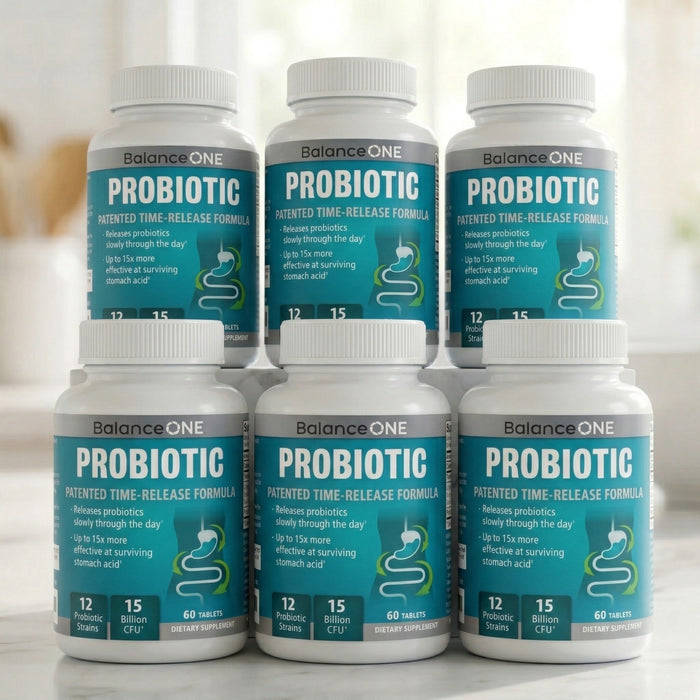
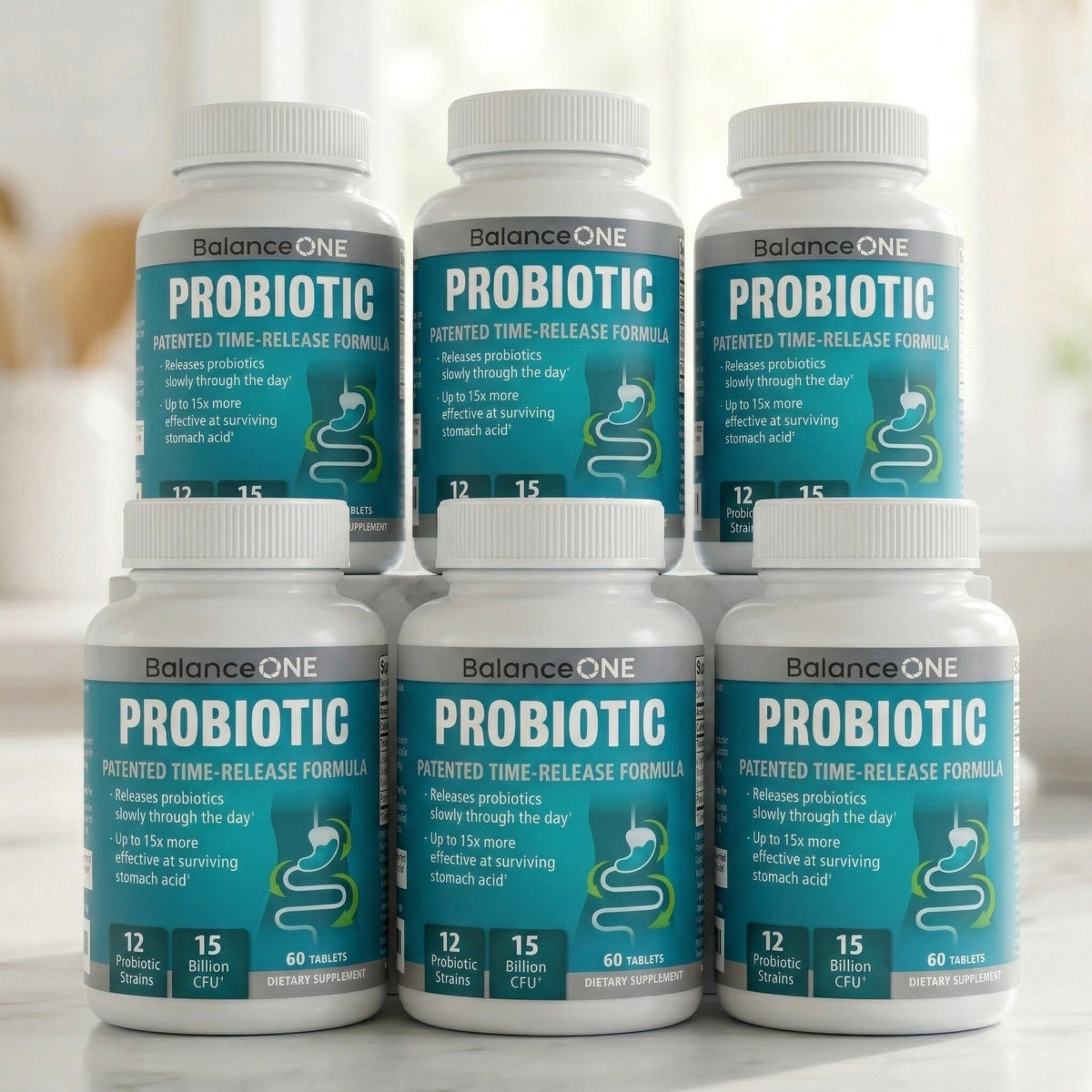
Balance ONE Probiotic is formulated as a once-daily time-release tablet rather than a conventional capsule. According to the product specifications, it contains 12 probiotic strains, with 15 billion CFU at manufacture and a minimum of 5 billion CFU guaranteed at expiration when stored as directed.
The BIO-tract® tablet technology is designed to gradually release the probiotic over approximately 8–10 hours during digestion. This gradual-release design is intended to help support probiotic survivability during the tablet's passage through the digestive tract.
If you're new to probiotics, our article 7 Signs Your Probiotic Is Working: What to Expect and When explains some of the changes people may notice as they begin taking a probiotic consistently.
Safety Considerations
Most healthy adults tolerate probiotic supplements well. Some people experience temporary digestive changes, such as mild gas or bloating, when first introducing a probiotic. These effects often improve as the digestive system adjusts.
Bottom Line
When comparing probiotic tablets vs capsules, there isn't a single format that's automatically superior. Both can be effective when they're thoughtfully formulated and manufactured to high quality standards.
Instead of focusing only on dosage form, consider the complete picture: probiotic strains, CFU count, stability, delivery technology, storage recommendations, and overall product quality. A well-designed probiotic—whether it's a tablet or capsule—is more likely to support your product and strain preferences than one chosen solely because of its format.
Understanding how these factors work together can help you make a more informed decision and choose a probiotic that fits your individual preferences and routine.
Frequently Asked Questions
These answers address how probiotic dosage forms differ in everyday use.
Are probiotic tablets better than capsules?
Not necessarily. High-quality probiotic tablets and capsules can both be effective. The formulation, delivery technology, strain selection, and manufacturing quality are generally more important than the dosage form itself.
Do time-release probiotics work differently?
Time-release probiotics are designed to release beneficial bacteria gradually during digestion rather than all at once. This approach is intended to help support probiotic survivability, although overall performance depends on the complete formulation.
Do all probiotic capsules dissolve in the stomach?
No. Some capsules dissolve quickly, while others use delayed-release or acid-resistant technologies. Capsule performance varies depending on the specific product.
What's more important: CFUs or delivery technology?
Both matter. A high CFU count alone doesn't provide the full picture. Delivery technology, strain selection, stability, and manufacturing quality all contribute to the overall quality of a probiotic supplement.
How can I tell if my probiotic is working?
Experiences vary from person to person. Some people notice gradual improvements in digestive comfort over time, while others experience temporary digestive adjustments when starting a probiotic. Consistent use according to the manufacturer's directions is generally recommended.
If you are seriously ill or have a weakened immune system, check with a healthcare professional before taking a probiotic. Stop taking it if symptoms are severe or worsening.